REPORTED SPEECH
Introduction
When we are reporting what someone else said, we normally don’t use their exact words with quotation marks (direct speech), but instead we use indirect speech (also called reported speech). Indirect speech is introduced using certain phrases.
- Example:
- He says/said …
- She explains/explained …
- She tells/told me …
- He asks/asked …
When we are reporting what someone else said, we normally don’t use their exact words with quotation marks (direct speech), but instead we use indirect speech (also called reported speech). Indirect speech is introduced using certain phrases.
- Example:
- He says/said …
- She explains/explained …
- She tells/told me …
- He asks/asked …
Example
Mandy is sitting in the café where James works. He tells her: “I work in this café almost every day. But yesterday I saw a famous TV presenter here for the first time. She was eating an ice-cream at the table where you are sitting now.” 
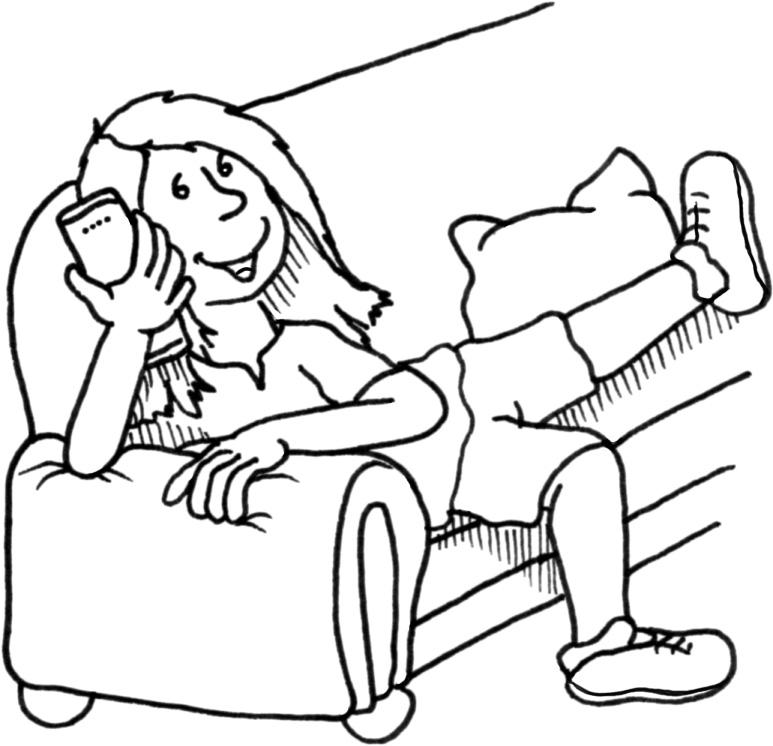
A week later, Mandy is speaking to a friend on the phone: “I saw James at the café last week. He said that he worked in that café almost every day, but that the day before he had seen a famous TV presenter there for the first time. She had been eating an ice-cream at the table where I was sitting at that moment.”
| Mandy is sitting in the café where James works. He tells her: “I work in this café almost every day. But yesterday I saw a famous TV presenter here for the first time. She was eating an ice-cream at the table where you are sitting now.” | |
| A week later, Mandy is speaking to a friend on the phone: “I saw James at the café last week. He said that he worked in that café almost every day, but that the day before he had seen a famous TV presenter there for the first time. She had been eating an ice-cream at the table where I was sitting at that moment.” |
Declarative Sentences
When turning declarative sentences into indirect speech, we need to pay attention to the following points:
- changing the pronouns
- Example:
- He said: I saw a famous TV presenter.
He said (that) he had seen a famous TV presenter.
- changing the information about time and place (see the table at the end of this page)
- Example:
- He said, “I saw a famous TV presenter here yesterday.”
He said (that) he had seen a famous TV presenter there the day before.
- changing the tense (backshift)
- Example:
- He said, “She was eating an ice-cream at the table where you are sitting.”
He said (that) she had been eating an ice-cream at the table where I was sitting.
When turning declarative sentences into indirect speech, we need to pay attention to the following points:
- changing the pronouns
- Example:
- He said: I saw a famous TV presenter.
He said (that) he had seen a famous TV presenter.
- changing the information about time and place (see the table at the end of this page)
- Example:
- He said, “I saw a famous TV presenter here yesterday.”
He said (that) he had seen a famous TV presenter there the day before.
- changing the tense (backshift)
- Example:
- He said, “She was eating an ice-cream at the table where you are sitting.”
He said (that) she had been eating an ice-cream at the table where I was sitting.
Changing the Tense (backshift)
If the introductory clause is in the simple past (e.g. He said), the tense has to be set back by one degree (see the table). The term for this in English is backshift.
- Example:
- He said, “I work every day.”
He said that he worked every day. - He said, “I saw a TV presenter.”
He said that he had seen a TV presenter. - He said, “She was sitting where you are sitting.”
He said that she had been sitting where I was sitting.
direct speech indirect speech simple present simple past present progressive past progressive simple past past perfect simple present perfect simple past perfect simple past progressive past perfect progressive present perfect progressive past perfect progressive future I (going to) was / were going to future I (will) conditional I (would) conditional I (would)
The verbs could, should, would, might, must, needn’t, ought to, used to normally do not change.
- Example:
- He said, “I could have asked her for an autograph.” – He said that he could have asked her for an autograph.
If the introductory clause is in the simple past (e.g. He said), the tense has to be set back by one degree (see the table). The term for this in English is backshift.
- Example:
- He said, “I work every day.”
He said that he worked every day. - He said, “I saw a TV presenter.”
He said that he had seen a TV presenter. - He said, “She was sitting where you are sitting.”
He said that she had been sitting where I was sitting.
| direct speech | indirect speech |
|---|---|
| simple present | simple past |
| present progressive | past progressive |
| simple past | past perfect simple |
| present perfect simple | |
| past perfect simple | |
| past progressive | past perfect progressive |
| present perfect progressive | |
| past perfect progressive | |
| future I (going to) | was / were going to |
| future I (will) | conditional I (would) |
| conditional I (would) |
The verbs could, should, would, might, must, needn’t, ought to, used to normally do not change.
- Example:
- He said, “I could have asked her for an autograph.” – He said that he could have asked her for an autograph.
Typical Changes of Time and Place
direct speech indirect speech today that day now then
at that moment/time yesterday the day before … days ago … days before last week the week before next year the following year tomorrow the next day
the following day here there this that these those
Requests and commands are formed using the "to-infinitive" in statements and "not + to-infinitive" in negative statements. If we report somebody's commands, we use the verb told . If it's a request, the word used in the main clause is usually asked .
- He asked me to close the window.
Commands
- Go to bed!
- He told me to go to bed.
- Don't go to bed!
- He told me not to go to bed.
Requests
- Could you buy some eggs?
- She asked me to buy some eggs
- Don't buy any eggs please.
- She asked me not to buy any eggs.
direct speech indirect speech today that day now then
at that moment/timeyesterday the day before … days ago … days before last week the week before next year the following year tomorrow the next day
the following dayhere there this that these those
Passive Verb Formation
Use of Passive
Passive voice is used when the focus is on the action. It is not important or not known, however, who or what is performing the action.
Example: My bike was stolen.
In the example above, the focus is on the fact that my bike was stolen. I do not know, however, who did it.
Sometimes a statement in passive is more polite than active voice, as the following example shows:
Example: A mistake was made.
In this case, I focus on the fact that a mistake was made, but I do not blame anyone (e.g. You have made a mistake.).
Form of Passive
Subject + finite form of to be + Past Participle (3rd column of irregular verbs)
Example: A letter was written.
The passive forms of a verb are created by combining a form of the "to be verb" with the past participle of the main verb. Other helping verbs are also sometimes present: "The measurecould have been killed in committee." The passive can be used, also, in various tenses. Let's take a look at the passive forms of "design."
| Tense | Subject | Auxiliary | Past Participle | |
| Singular | Plural | |||
| Present | The car/cars | is | are | designed. |
| Present perfect | The car/cars | has been | have been | designed. |
| Past | The car/cars | was | were | designed. |
| Past perfect | The car/cars | had been | had been | designed. |
| Future | The car/cars | will be | will be | designed. |
| Future perfect | The car/cars | will have been | will have been | designed. |
| Present progressive | The car/cars | is being | are being | designed. |
| Past progressive | The car/cars | was being | were being | designed. |
A sentence cast in the passive voice will not always include an agent of the action. For instance if a gorilla crushes a tin can, we could say "The tin can was crushed by the gorilla." But a perfectly good sentence would leave out the gorilla: "The tin can was crushed." Also, when an active sentence with an indirect object is recast in the passive, the indirect object can take on the role of subject in the passive sentence:
used to do
I used to be handsome.
We use used to do to talk about the past. It is not a tense but it is like a tense. It is a special structure. We use the structure used to do for the past only.
Do not confuse used to do with with the expression be used to. They have different meanings.
Structure of used to do
The structure of used to do is:
| subject | + | main verb use | + | to-infinitive |
Look at the structure again with positive, negative and question sentences:
| subject | auxiliary did | not | main verb use | infinitive | |
|---|---|---|---|---|---|
| + | I | used | to like him. | ||
| - | I | did | n't | use | to work. |
| ? | Did | you | use | to drink? |
Used or use?
- when there is no did in the sentence, we say used to (with d)
- when there is did in the sentence, we say use to (without d)
Use of used to do
We use the used to do structure to talk about:
- an activity that we did regularly in the past (like a habit)
- a situation that was true in the past
| past | present | future | ||
| I used to smoke. | ||||
Look at these examples.
| past | present |
|---|---|
| She used to work in a shop. | Now she works in a bank. |
| He used to watch a lot of TV. | Now he doesn't watch much TV. |
| They used to be married. | Now they are divorced. |
| There used to be a cinema here. | Now there is a supermarket here. |
| I didn't use to go swimming. | Now I go swimming. |
| Did you use to smoke? |
PRESENT PERFECT.
Use
1) Result of
an action in the past is important in the present
I have cleaned my
room.
2) Recently
completed actions
He has just played handball.
3) Actions
beginning in the past and still continuing
We have lived in Canada
4) Together
with lately, recently, yet
I have been to London
SIGNAL WORDS
just, yet, never, already, ever, so far, up to
now, recently, since, for
PRESENT PERFECT - COMMON MISTAKES
|
||
Common mistakes
|
Correct version
|
Why?
|
Steven has wrote a new book.
|
Steven has written a
new book.
|
The past participle of the verb must be used - wrote is past
simple, written is the past participle.
|
Did you have seen him before?
|
Have you seen him before?
|
The helping verb 'have' is used in the present perfect- it is inverted
with the person (you have becomes have you).
|
I didn't have seen him before.
|
I haven't seen him
before.
|
The helping verb 'have' is used in the present perfect- to make it
negative we simply add not (n't).
|
I am here since last week.
|
I have been here
since last week.
|
The present perfect is used to show an action which continues to the
present (an unfinished action).
|
I've been knowing him for 5 years.
|
I've known him for 5 years.
|
Verbs such as know, want, like, etc. (stative
verbs) suggest permanent states, not actions, so are used in the simple form,
NOT the -ing form.
|
THE SIMPLE PRESENT TENSE
Introduction
The Simple Present is frequently used in
English. It is also called Present
Simple.
Uses:
1)
Routines (a sequence of
actions regularly followed)
I wake
up at 5.30
2) Repeated actions (using adverbs of
frequency)
My
friend often draws nice posters.
I never drink milk.
I never drink milk.
Frequency
|
Adverb of Frequency
|
Example Sentence
|
100%
|
always
|
I always go to bed before 11pm.
|
90%
|
usually
|
I usually have cereal for breakfast.
|
80%
|
normally / generally
|
I normally go to the gym.
|
70%
|
often* / frequently
|
I often surf the internet.
|
50%
|
sometimes
|
I sometimes forget my wife's birthday.
|
30%
|
occasionally
|
I occasionally eat junk food.
|
10%
|
seldom
|
I seldom read the newspaper.
|
5%
|
hardly ever / rarely
|
I hardly
ever drink alcohol.
|
0%
|
never
|
I never swim in the sea.
|
3) Facts which are always true
(present, past and future) – general truths e.g. facts in science and
geographical descriptions.
Water freezes at 0 degrees.
The sun rises in the East.
4) Fixed arrangements, scheduled events (e.g. timetable)
The plane flies to London
5) To express future actions that are
scheduled to occur. Some verbs that are commonly used in the simple present to express
the future are arrive, begin, close, come, end, finish, leave, open, return,
and start.
The spring term begins in January next year.
6) After special verbs, which are normally not used with the Present
Progressive (These
verbs express states, possessions, feelings
etc.)
be, believe, belong, hate, hear, like, love, mean, prefer, remain, realize, see, seem,
be, believe, belong, hate, hear, like, love, mean, prefer, remain, realize, see, seem,
smell, think, understand, want, wish
I understand English.
He doesn't like fish.
He doesn't like fish.
Forming the simple present
tense
There are
only two basic forms for the simple present tense; one ends with -s and the
other doesn't. Here are the rules, using the example verb "sing":
In other
words, only THIRD PERSON SINGULAR subjects (he, she and it) have to have a
verb with -S.
S ,ES or IES?
With most
verbs, the third person singular form is created simply by adding -S. However, with some verbs,
you need to add -ES or -IES. Here are the rules:
|
|||||||||||||||||||||||||||||||||||||||||||||||||||||||||||||||||||||||||||||||

No hay comentarios:
Publicar un comentario